Sensing & response
Light-sensing car
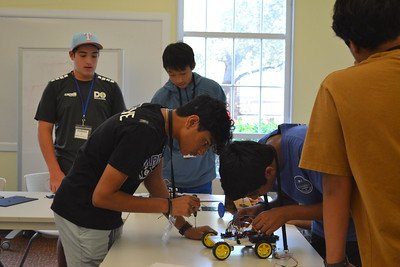
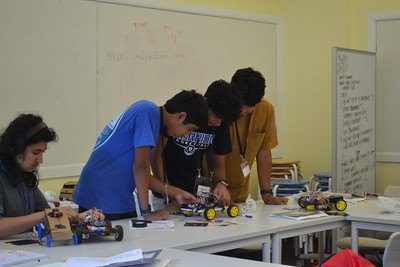
A prototype concept for exploring how sensors detect changes in light and how a system can respond. It offers a practical entry point into circuits, feedback, and testing.
Build
Scientific understanding becomes especially powerful when it helps us ask better design questions. These concepts are presented as explorations and prototypes, not as validated products.
Prototypes and concepts

Sensing & response
A prototype concept for exploring how sensors detect changes in light and how a system can respond. It offers a practical entry point into circuits, feedback, and testing.

Engineering
Sketching, building, and testing a robot invites learners to combine mechanical design, electronics, control, and iterative problem-solving.
Accessible design
A broader design concept explores how personalized fit, material flexibility, and sensing might support different needs. A proposed navigation aid could combine obstacle sensing with haptic feedback, but safety, reliability, and usability would need rigorous testing before real-world use.
A human-centered process
Understand the person, context, and problem before choosing a solution.
Sketch multiple possibilities and make assumptions visible.
Build a small, testable version to learn what works and what does not.
Use evidence and user feedback to revise the design responsibly.
Design principle
Good design listens to the people who may use it. Human differences are not defects to erase; they are a reason to build more thoughtfully, test carefully, and make room for individual needs.
Share your curiosity